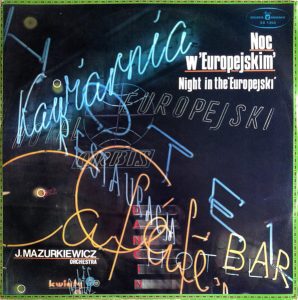
# Józef Mazurkiewicz – Noc W 'Europejskim'
Józef Mazurkiewicz was a prominent Polish jazz pianist and composer who became a significant figure in Eastern European jazz during the mid-twentieth century. By the mid-1970s, Mazurkiewicz had established himself as a versatile musician capable of blending jazz sophistication with accessible popular music forms. This 1975 release on Polskie Nagrania Muza, Poland's major state-run record label, represents a document of his mature artistic period when he was actively performing in Warsaw's jazz clubs and concert venues.
Noc W 'Europejskim' translates to "A Night at the Europejski," referring to the Hotel Europejski in Warsaw, one of the city's most prestigious venues. The album captures the essence of a live performance or concert setting, presenting Mazurkiewicz in an intimate setting where his sophisticated tastes in repertoire are on full display. This context is crucial for understanding the album's artistic direction and appeal to the Polish listening public of the era.
The musical approach on this release bridges easy listening sensibilities with genuine jazz musicianship, creating an accessible yet artistically credible listening experience. The first side opens with the iconic "Raindrops Keep Falling On My Head" paired with "I'll Never Fall In Love Again," immediately establishing the album's focus on sophisticated popular standards and film music. Standout selections include his renditions of "Cabaret," "Waterloo" with "Hasta Manana," and a tender "My Fair Lady," all of which showcase Mazurkiewicz's lyrical piano touch and ability to invest emotional depth into well-known melodies.
The second side ventures more deeply into European popular music and jazz traditions, featuring several Polish compositions alongside continental favorites. "Maria Elena," "Całuję Twoją Dłoń Madame," and the passionate "Paryskie Tango" demonstrate his affinity for romantic European jazz aesthetics. The inclusion of film soundtrack material, particularly the track from "Kobieta I Mężczyzna," reflects the period's cinema culture and the importance of soundtrack music to jazz musicians and audiences.
The album represents a fascinating artifact of 1970s Polish jazz, where Western popular culture influences coexisted with local musical traditions. For vinyl collectors interested in Eastern European jazz, European easy listening traditions, or the specific sound of Warsaw's mid-century jazz scene, this Polskie Nagrania Muza pressing offers authentic historical documentation and genuinely skilled musicianship from an artist deserving of greater international recognition.