# Isaac Hayes – Don't Let Go Review
Isaac Hayes' 1979 single "Don't Let Go" represents a significant moment in the legendary soul artist's career as he navigated the evolving landscape of late 1970s popular music. By this point, Hayes had already established himself as a towering figure in soul and funk, having achieved massive success with his lush orchestral arrangements and distinctive deep baritone vocals throughout the previous decade. His work at Stax Records had cemented his reputation as both a songwriter and performer, and he had proven his ability to adapt to changing musical trends while maintaining his signature sound.
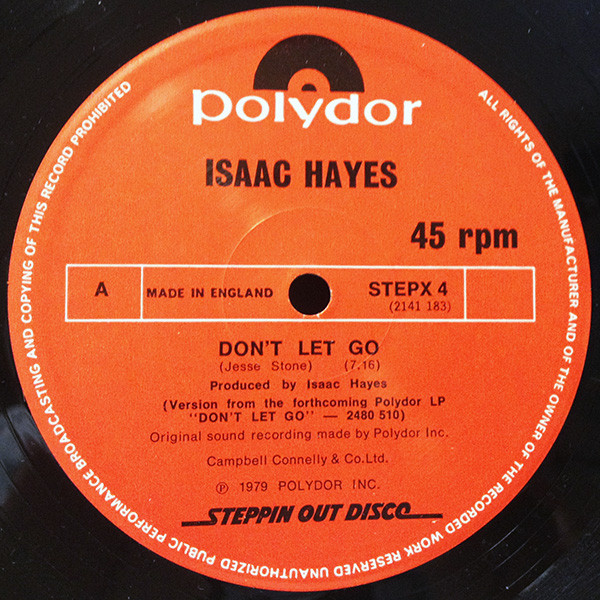
Released on the Polydor label, "Don't Let Go" finds Hayes embracing the disco and funk elements that were dominating the charts during 1979. The album reflects the broader shift in soul music toward more dance-oriented production, incorporating the syncopated rhythms and electronic textures that defined the era. Hayes' willingness to explore these contemporary sounds demonstrates his enduring relevance as an artist who refused to be confined by his previous aesthetic achievements.
The A-side, "Don't Let Go," stretches to over seven minutes and showcases Hayes' ability to command an extended composition. The track builds a compelling groove that merges funk and disco sensibilities with Hayes' unmistakable vocal presence. His delivery carries the same emotional weight and control that made him famous, even as the instrumentation pulses with the energy of late 70s dance music. The arrangement balances Hayes' soulful performance with the rhythmic drive of the era's most contemporary production techniques.
The B-side, "You Can't Hold Your Woman," offers a contrasting piece at just under five minutes. This track continues the funk-soul direction while exploring themes of relationships and emotional independence, topics central to Hayes' artistic expression throughout his career.
This 12-inch vinyl pressing on Polydor captures a transitional moment for Hayes, where he successfully merged his established soul credentials with the infectious grooves of disco and funk. For collectors interested in late 70s soul music and how established artists navigated the disco era, this single offers valuable historical perspective and solid musical content that rewards repeated listens.