# Police In Helicopter / Bills
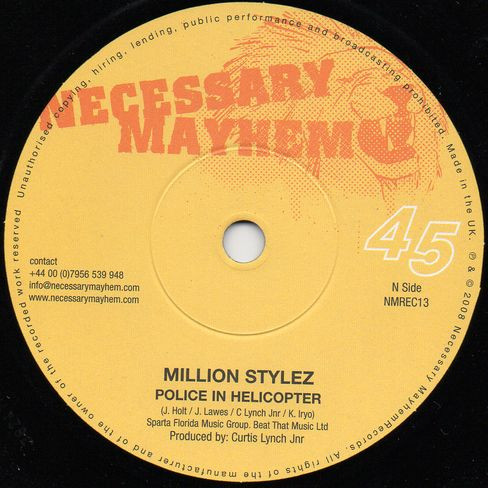
This 2008 seven-inch single from Necessary Mayhem brings together five reggae vocalists for a collaborative release that showcases the depth of the contemporary reggae scene. Million Stylez, YT, Mr Williamz, Blackout Ja, and Michie One combine their talents on two tracks that demonstrate the versatility and social consciousness prevalent in modern reggae music.
The A-side, "Police In Helicopter," addresses themes of surveillance and state control, topics that have long resonated within reggae culture. The track brings together multiple vocal perspectives, with each of the featured artists contributing their own interpretation and delivery to the central message. This collaborative approach allows the song to build momentum and intensity, with different vocal styles layering over what would be a driving reggae rhythm section. The subject matter reflects reggae's enduring tradition of social commentary, positioning law enforcement scrutiny as an invasion of personal freedom and community autonomy.
On the flip side, "Bills" shifts the focus to economic struggles and financial pressures facing everyday people. The song addresses the universal stress of financial obligations in a manner that resonates across reggae's working-class audience. Rather than offering false solutions, the track presents an honest examination of these persistent challenges, maintaining reggae's reputation as the voice of the marginalized and struggling.
Released during a period of significant digital music transition, this vinyl single represents a tangible artifact from 2008, a year when physical releases still held considerable importance in reggae distribution. The seven-inch format itself carries cultural weight within reggae tradition, harking back to the singles-driven history of the genre in Jamaica and beyond.
Necessary Mayhem's curation of these five vocalists suggests careful consideration of complementary styles and perspectives. The pairing of "Police In Helicopter" and "Bills" creates a thematic arc that moves from external threats to internal economic pressures, both persistent concerns in reggae discourse. For collectors focused on contemporary reggae or the intersection of social commentary and musical innovation, this single represents an important snapshot of the genre's continued evolution and relevance in the late 2000s.