From the stacks
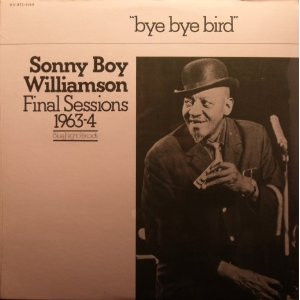
Sonny Boy Williamson (2)
Final Sessions 1963-4
Sonny Boy Williamson (2) — Final Sessions 1963-4, 1979. Verified release details and tracklist.
- Label
- Blue Night Records
- Catalog
- BN 073-1668
- Year
- 1979
- Format
- Vinyl - LP
Data provided by Discogs ↗
Listening notes
Sonny Boy Williamson (2)'s Final Sessions 1963-4 is catalogued as a Vinyl - LP from 1979.
The release is listed on Blue Night Records under catalog number BN 073-1668.
Discogs classifies this release under Blues.
The 10-track sequence includes Mattie Is My Wife (Take 4) (4:58), Gonna Find Somebody Else (4:38), Mattie Is My Wife (Take 3) (3:21), My Name Is Sonny Boy (4:51), Bye Bye Bird (2:53), So Sad To Be Lonesome (4:22) and other selections.
This entry is based on verified release fields and tracklist data. Pressing-specific details beyond those fields are not inferred here.
Tracklist
On the record
- A1Mattie Is My Wife (Take 4) (4:58)
- A2Gonna Find Somebody Else (4:38)
- A3Mattie Is My Wife (Take 3) (3:21)
- A4My Name Is Sonny Boy (4:51)
- A5Bye Bye Bird (2:53)
- B1So Sad To Be Lonesome (4:22)
- B2Nine Below Zero (5:38)
- B3Don't Tell Nobody (4:06)
- B4Kind-Hearted Woman (3:14)
- B5Milky White Way (6:14)